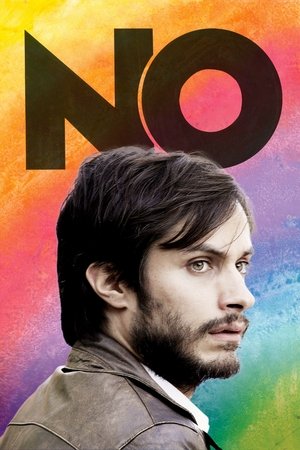
No (2012-08-09)
Drama | History |
Overview
Directed By: Pablo Larraín
Star Cast: Gael García Bernal , Alfredo Castro , Néstor Cantillana , Luis Gnecco ,
Videos Playlist
Similar Collection

Images











-
Andres Gomez
Interesting and informative movie about the events that started the transition in Chile from the dictatorship to the democracy.
-
badelf
This is an amazing true story. The directing feels messy, but it's clear that it was intended to imitate the mess that surrounded this story in real life. Pinochet was one of several dictators that was installed by United States through the agency of the CIA. Why? We can only guess that the sitting Chilean president had left leanings which seems to piss off Americans to no end. (Health care? Oh no - that would be socialist!! Much better to let citizens die or go bankrupt trying to survive.) The USA's little puppet then proceeded to murder and torture thousands of Chileans. Quite probably, the US trained those torturers. The official count is 29,000, plus 3000 dead, plus an uncounted number of "desaparecidos" (mysteriously missing forever). It is beneficial to first watch "Nostalgia de la Luz" which will help give you some understanding of Chileans' relationship with Pinochet.
-
CinemaSerf
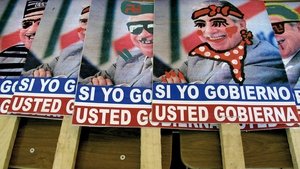
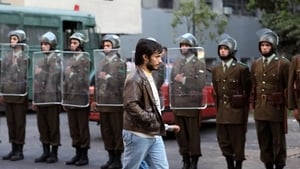
Fifteen years into his dictatorship, Augusto Pinochet was compelled by international pressure to hold a plebiscite on continuing his rule over Chile for a further eight years. With the entire political and media establishment behind him, his supporters expected a bit of a cake walk - but they hadn’t factored on the creative force of the “no” campaign that was being framed by “René Saavedra” (Gael García Bernal). He was more used to running commercial advertisements for soft drinks, but when his agency are given what looks like the poisoned chalice to challenge the government, he allies himself with what little there is by way of open opposition and proceeds to create a campaign that causes ructions from within his own side. He decides against rubbishing the generals. He doesn’t just list all of their brutalities as a series of eye-watering statistics. Instead, he turns the whole thing on it’s head by extolling the virtues of the promise of free society and the “happiness” that will ensue if the citizenry embrace this opportunity for freedom, liberty and democracy. Of course, the army and the police are never far from his home and so he is constantly wary of attacks on his colleagues, his young son “Simón” (Pascal Montero) and his ex-wife “Verónica” (Antonia Zegers) - herself a courageous campaigner unafraid of taking a few beatings at the hands of the zealous authorities. With only fifteen minutes of airtime per day, and with their pre-recorded broadcasts often restricted or leaked to the pro-Pinochet faction, what are the chances that their almost hippie style of kumbaya messaging might gain traction? Now if you’re looking for a documentary on the decline and fall of this regime, or for any meaningful critique of Pinochet or his administration then you are probably going to be disappointed. This takes a far more individualistic approach to the activities of one man who beat the system by inventing a new one. Bernal’s “Saavedra” isn’t an especially brave man, nor is he inherently revolutionary by nature. He is a family man making a decent living who has, hitherto, had little to do with the excesses of the military. Indeed at the start, you might be forgiven for feeling that he is doing a job as if it were cheesy Wotsits he was promoting. As the violence increases, though, and his investment in the cause increases Pablo Larraín makes sure our’s does too. To help achieve that, the levels of snooping and intimidation are cleverly laid bare by seamlessly incorporating archive actuality footage into the drama of real riots; real police brutality on the streets and of Pinochet himself - albeit sparingly - as he deigned to participate in a referendum that nobody expected him to lose. It’s those documentary elements that poignantly underpin the more dramatic ones and though perhaps Bernal wouldn’t have been my first choice for this role on paper, he proves perfectly capable of crafting a character that epitomises the senses of fear and opportunity that the newsreel style of filmed presentation throughout delivers quite well. This isn’t the whole story of these eventful days, but it is a plausible look at one piece of that perilous jigsaw.