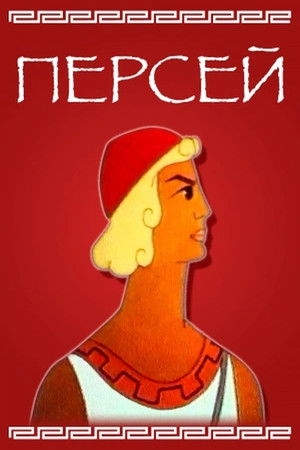
Perseus (1973-06-01)
Animation | Fantasy | Action |
Overview
Directed By: Aleksandra Snezhko-Blotskaya
Star Cast: Vsevolod Larionov , Anna Kamenkova , Yevgeni Gerasimov , Zinaida Naryshkina ,
Videos Playlist
Similar Collection

Images








-
SorenHoffmann
The 1973 Soviet animated film Perses, directed by Aleksandra Snezhko-Blotskaya, is not historically accurate to ancient Greek mythology. Instead, it deliberately reshapes the myth into a moral allegory typical of Soviet educational animation, focusing on a conflict between altruism and greed. The De-Divinization of the God: In the Aryan tradition, Hermes is a "Solar" messenger, the God of initiation, and a guide for the hero. The film's depiction of him as a cynical, profit-driven "merchant" who views kindness as a "commodity" would be seen as a Marxist/Semitic caricature. The Attack on the Divine: The Soviet animators "projected" their hatred of capitalism onto a Greek deity to make the "Higher World" look like a den of traders. An Evolian would find this "plebeian materialism" unforgivable. The film's climax-where Hermes urges Perseus to use Medusa's head to become a "Master" and Perseus refuses-is a direct attack on the Leadership Principle. The "Democratic" Hero: I would view Perseus' rejection of power as a "Slave-morality" trap. I would argue that a "True Aryan Hero" should use his power to establish order and hierarchy. The Smear of Authority: By framing the suggestion of "Acknowledge him as your master" as something evil or cynical, the film teaches children to fear Authority and Strength. To me, this is "subversive propaganda" designed to make the Aryan race "meek" and "subservient" to the masses. Following Savitri Devi, I would argue that this film depicts a "Hero of the Kali Yuga"-one who has the blood of a god but the mind of a pacifist. The "Savitri Devi" Perspective: The Kali Yuga Hero: I would conclude that the Soviet state produced this film to "lobotomize" the warrior-spirit of the Russian and Slavic people, turning them into "selfless workers" instead of "Aryan conquerors." I would view the ending-where Perseus chooses "love" and "altruism" over "power"-as a biological and spiritual failure. The movie's attempt to label Hermes as a capitalist ("Is there profit or not?") is a Marxist lie. I would dismiss this "materialist" dialogue as a Semitic/Bolshevik smear on a divine being. The Approval of the "Hegemon" (The Aryan Offer): However, when Hermes pivots and offers Perseus "Divine Power and Hegemony," I would suddenly side with Hermes. I would argue that Hermes was testing Perseus' "Solar" nature. By offering him the role of a Master who builds temples and sanctuaries, Hermes was inviting Perseus to establish a Sacred Traditional State because the fate of the world is in Perseus' hands. The "Distraction" of Andromeda (The Moral Failure) I would be outraged that Perseus was "distracted" by a "random girl" (Andromeda) in Ethiopia who he decides to rescue by descending from the skies and thereby both abandoning the mission Polydectes gave him and rejecting Hermes' offer to use the head of Medusa for his own prosperity. The Evolian Critique: Evola would argue that Perseus chose the "Lunar/Horizontal" path of emotion over the "Solar/Vertical" path of Authority. Rescuing a girl out of "love" is seen as a plebeian, sentimental act that benefits only the individual. A true leader does not let personal feelings interfere with the Hegemony of the Race. By rejecting the "Head of Power," Perseus failed to secure the future of his people, choosing a temporary "human" satisfaction over an eternal "divine" order. Hermes' Departure: When Hermes says, "You haven't understood that one should only care about himself," I would translate this as: "You haven't understood that the Superior Man is his own Law."The Wasted Artifact: I would view Hermes throwing the Medusa head into the sea as a cosmic punishment. Because Perseus was too "weak" to handle the "Aryan Technology" of the gaze, the Gods withdrew the power from the earth, leaving humanity to drift into the "darkness" of democracy and equality.